It is a quiet Wednesday morning in East London. Someone in Beacon Bay needs an HVAC technician. Their air conditioner has packed up, the office is getting warm, and they reach for their phone. They open Google and type something simple. “Aircon repair near me.” Maybe “HVAC East London.”
Three businesses appear in a box at the top of the results. A map. Star ratings. Phone buttons. The person taps the first one, has a brief conversation, and books a callout.
Your business is the best in the area for that job. You have been doing it for twelve years. You have a website. You have happy customers. But you were not in that box. You were not even on the first page.
So the work went to someone else.
This is local search. For most East London businesses it is the single largest source of customers being quietly handed to competitors every day. Not because those competitors are better, but because Google does not yet know enough about you to put you in front of the right person at the right moment.
This post is about how that actually works, and what genuinely fixes it.
What the Local Pack actually is
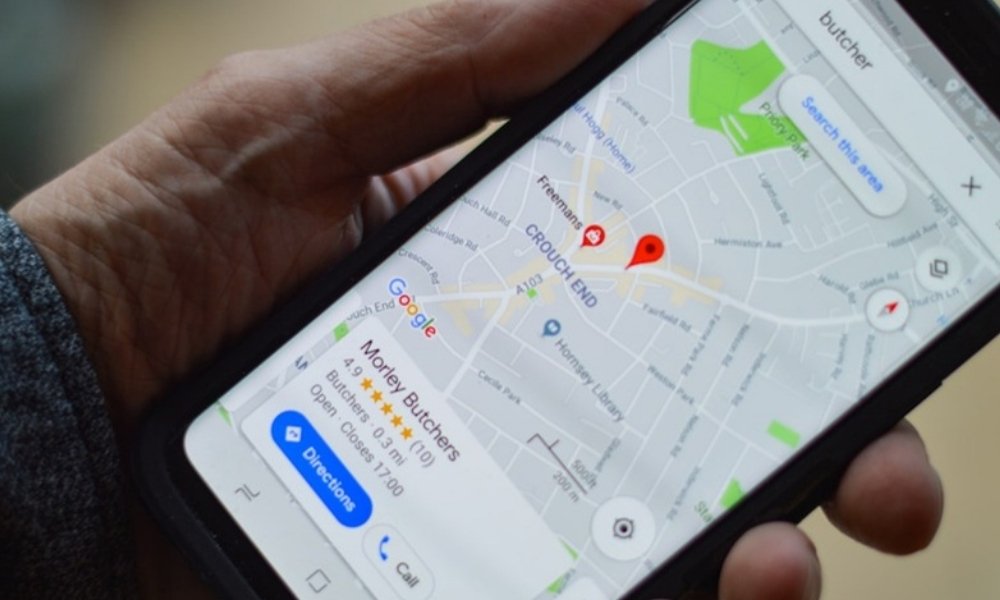
When someone searches for a service near where they are, Google tries to do two things at once. It shows a list of websites that look relevant, and it shows a map with a small group of nearby businesses pinned to it. That group of pinned businesses is usually called the Local Pack, and for most service searches it sits right at the top of the page.
Most people never scroll past it.
That is not laziness. It is convenience. The Local Pack puts a phone number, a rating, and directions a single tap away. So if your business is not in that group of three, you are competing for the leftover attention of people who decided none of the first three options would do.
In practical terms, ranking in the Local Pack matters more for most East London businesses than ranking anywhere else on the page. It is where the decision actually happens.
Why Google might not know you exist
Most local businesses assume that having a website is enough for Google to find them. It is not. A website tells Google that a business exists somewhere on the internet. It does not, on its own, tell Google that the business is in East London, what it does, when it is open, or whether it can be trusted.
That information mostly lives somewhere else: a free tool from Google called the Google Business Profile.
Your Google Business Profile is what powers the Local Pack and your appearance on Google Maps. It is what shows the photo, the star rating, the phone number, the hours, the directions. If it is missing, incomplete, or full of outdated information, Google has no reason to show your business confidently to anyone.
A lot of East London businesses still do not have one set up properly. Some have a profile, but it was claimed years ago by someone who has since left the company. Some have the wrong address listed. Some have no photos, no description, no service list. In each case, the business is essentially invisible on the most important search surface they have.
The three things Google is actually weighing up
When someone in East London searches for a service, Google is making a quick judgement about which businesses to show in the Local Pack. It comes down to three things.
The first is relevance. Does this business actually offer what the person searched for. That sounds obvious, but it is not automatic. If your Google Business Profile says “construction services” and the person searched for “ducting installation,” Google has to decide whether those mean the same thing. The more clearly your profile and your website describe what you do, the easier that decision becomes.
The second is distance. How close is the business to where the person is searching from. Distance is something you cannot really change, but the impact of distance is something you can influence. A business that is well set up for local search will appear higher in nearby suburbs than one that is poorly set up but closer. Distance is one factor, not the only one.
The third is prominence. How well-known and trusted does this business appear to be. Prominence comes from reviews, from how often the business is mentioned across the web, from the quality of the website it links to, and from how active and complete the Google Business Profile is. This is the factor most businesses underestimate, and it is the one that does the heaviest lifting once relevance and distance are in order.
Most East London businesses are not missing out on local search because they are too far away. They are missing out because their prominence signals are weak.
What your website still has to do
The Google Business Profile is the heaviest hitter for local rankings, but it does not replace your website. The two work together, and Google checks one against the other.
If a customer taps your business in the Local Pack and lands on a website that loads slowly, looks dated, contradicts the information on your profile, or makes them work too hard to find what they need, two things happen. The customer leaves quickly, and Google notices that they left quickly. Over time, that hurts your rankings.
A website that supports local search clearly states where the business operates, what services are offered, and who the typical customer is. It uses real language, not vague marketing copy. It loads quickly on a phone, because most local searches happen on phones. It makes the next step obvious.
There is also the matter of local content. A business that publishes useful, well-written content about its area, its industry, and the questions its customers actually ask is sending Google an ongoing signal that it knows its market. A business that only has a homepage and a contact page sends almost no signal at all.
For more on what a website should actually be contributing to a business, our earlier piece on what your business would lose if your website disappeared is a useful companion to this one.
Reviews are doing more work than most owners realise
Reviews on your Google Business Profile do two things at the same time. They influence the customer who is reading them, and they influence whether Google shows your business to that customer in the first place.
A profile with twelve reviews and a 4.8 rating outperforms a profile with two reviews and a 5.0 rating in most local searches. The number of reviews matters. So does how recently they were left. So does whether you reply to them. Google reads all of this and uses it to decide how confident it is in showing you.
This is not about gaming the system. It is about closing the loop. If you do good work, the reviews should be there. If they are not, it is usually because no one has been asked.
A simple habit, asking happy customers for a review the same week the work is completed, can shift a profile that is going nowhere into one that compounds month on month.
A note on industry-specific local searches
The shape of a search changes based on what is being searched for. Someone looking for a coffee shop in Vincent is making a low-stakes choice, and they will probably pick from whatever the Local Pack shows them. Someone looking for an HVAC contractor, a steel supplier, or a ducting installer is making a higher-stakes choice, and they will read more carefully before they call.
This matters for industrial and service-based businesses in particular. If your customers are factories, installers, or commercial property managers, the searches they run tend to be longer and more specific. “Industrial ducting installation East London.” “HVAC maintenance contractor near me.” “Steel fabrication supplier Eastern Cape.”
For those searches, the Local Pack still matters, but so does what happens when the visitor lands on your site. A vague homepage that lists services without context will lose them. A page that speaks specifically to their industry, references the kind of work they are looking for, and shows that you understand the problem will hold their attention.
Local SEO for industrial businesses is less about high traffic and more about being the obvious answer for a small group of high-value searches.

The mistakes that quietly hurt local rankings
Most local SEO problems are not dramatic. They are small, accumulated, and easy to miss. The most common ones include:
- Inconsistent business information across the web. If your name, address, or phone number appear differently on your website, your Google profile, your Facebook page, and old directory listings, Google starts to doubt which version is correct. That doubt costs rankings.
- A neglected Google Business Profile. No recent photos, no posts, no responses to reviews, missing service descriptions. Google reads inactivity as a sign that the business may not be operational.
- A website that is not built for mobile. Most local searches happen on a phone. If your site is slow, hard to read, or hard to tap, visitors leave fast and Google notices.
- No location signals on the website itself. Pages that never mention East London, the suburbs you serve, or the industries you work with give Google nothing to anchor your relevance to.
- Treating reviews as optional. Businesses that do not actively ask for reviews almost always have fewer of them than the work would justify. Competitors with weaker work but stronger review habits will outrank them.
None of these are difficult to fix individually. The compounding effect of fixing them together is what changes a business’s visibility.
What actually moves the needle
If you want to be honest about where to spend effort, the short version is this. A well-completed Google Business Profile, consistent business information across the web, a website that loads fast and clearly states what you do and where you do it, and a steady habit of asking for reviews will outperform almost any clever SEO trick.
It is not glamorous, but it is what works. Local SEO rewards businesses that look organised and trustworthy across every place a customer might check.
For East London businesses, the upside of doing this properly is significant. The local market is competitive, but the bar for good local SEO is not as high as it is in larger cities. A modest, focused effort can move a business from invisible to consistently appearing in the Local Pack within a few months.
A simple next step
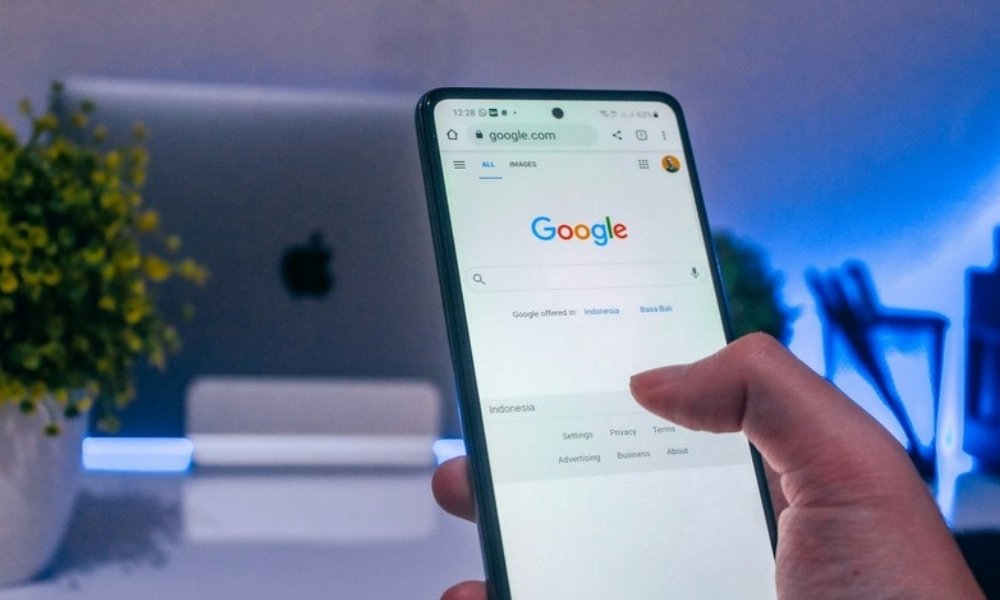
If reading this has made you wonder where your own business currently stands, that is a useful place to start. Open Google on your phone, search for the service you provide along with “East London,” and see what comes up. Are you in the Local Pack. Are you on the first page at all. Does the information that does appear actually match what your business does.
That short test usually tells a clearer story than any audit tool.
If you would like a closer look at why your business is or is not appearing in those searches, and what would actually improve it, get in touch and we can talk through what local SEO would look like for your specific business.